

Understanding Forex Leverage: How It Works and Its Risks
Ever wondered how some forex traders control positions worth $100,000 with just $1,000 in their account? The answer lies in leverage – a powerful tool that’s both the blessing and curse of the forex market. In the world’s largest financial market, with over $5 trillion in daily transactions, leverage allows everyday traders to participate without committing substantial capital upfront.
But this financial magnifying glass cuts both ways. While a 100:1 leverage ratio can turn a modest 1% market movement into an impressive 100% return on your investment, that same movement in the opposite direction could wipe out your entire trading account. This dual nature makes leverage simultaneously enticing and dangerous, especially for newcomers drawn to the potential for quick profits. As you continue reading, you’ll discover how leverage actually works, the potential benefits it offers, the significant risks involved, the hidden costs of leveraged trading, and most importantly—how to implement effective risk management strategies to protect your capital.
What Is Forex Leverage and How It Works

Definition and Basic Mechanics of Leverage
Forex leverage is a powerful tool that allows traders to control larger positions than their actual capital would permit by borrowing funds from brokers. In essence, leverage gives you the ability to trade with more money than you have in your account. For example, with a leverage ratio of 100:1, you can control $100,000 worth of currency with just a $1,000 deposit.
The mechanics of leverage work through a margin account where your deposits serve as collateral for the borrowed funds. This practice is especially common in the forex market—the world’s largest financial market, which handles over $5 trillion in daily currency exchanges. Traders use leverage to buy and sell currency pairs, aiming to profit from favorable movements in exchange rates.
Margin Requirements and Calculations
Margin is essentially the “good faith deposit” required to open and maintain leveraged positions. It’s typically expressed as a percentage of the total position value. The margin requirement determines how much leverage you can use in your trading.
For example:
- A 1% margin requirement translates to a 100:1 leverage ratio
- A 2% margin requirement translates to a 50:1 leverage ratio
- A 5% margin requirement translates to a 20:1 leverage ratio
To calculate the margin needed for a trade, you multiply the total position size by the margin percentage. With a 2% margin requirement, a $100,000 position would require $2,000 in margin.
Key margin terms include:
- Used margin: The amount of your account equity currently being used to maintain open positions
- Usable margin: The funds available to open new positions
- Margin call: When your account equity falls below the required margin level, requiring you to deposit more funds or face liquidation of positions
Leverage Ratios in Forex vs. Other Markets
Forex trading typically offers much higher leverage ratios compared to other financial markets. While forex brokers commonly offer ratios ranging from 20:1 to as high as 400:1, stock trading is governed by stricter regulations with significantly lower leverage.
The differences include:
- Forex: Higher leverage (up to 400:1 in some jurisdictions), lower margin requirements
- Stocks: Lower leverage (typically 2:1 to 4:1), higher margin requirements
Regulatory environments affect maximum available leverage, with reputable brokers adhering to local regulations that often cap leverage ratios to protect traders from excessive risk.
Real Leverage vs. Account Leverage
It’s important to distinguish between real leverage and account leverage. Account leverage refers to the maximum leverage available based on your broker’s offerings, while real leverage is the actual amount you’re using in your trading.
For example, if you have a $10,000 account with 50:1 available leverage, your account leverage allows you to control up to $500,000. However, if you only take a $100,000 position, your real leverage is just 10:1 ($100,000/$10,000).
Understanding the difference helps traders manage risk more effectively. While your broker might offer high leverage ratios, you don’t need to utilize the maximum amount for every trade.
Now that we’ve covered what forex leverage is and how it works, let’s examine the potential benefits that leveraged trading can offer to forex traders.
The Potential Benefits of Using Leverage

Now that we understand what forex leverage is and its basic mechanisms, let’s explore the potential benefits that make it an attractive tool for traders.
Amplifying Profit Potential with Limited Capital
Leverage allows traders to control substantial positions with relatively small initial investments. With leverage ratios commonly offered in forex markets (such as 100:1), traders can potentially generate significant returns even with modest capital. For example, using a 100:1 leverage ratio means you can control a $100,000 position with just $1,000 of your own capital. This amplification means that even small price movements in currency pairs can translate to meaningful profits relative to your invested capital.
Accessing Larger Market Positions
For retail traders with limited funds, leverage democratizes access to the forex market by enabling positions that would otherwise be unattainable. Without leverage, a trader might only be able to trade minimal lot sizes, but with leverage, they can participate in more significant market movements. For instance, controlling a $100,000 position with just a $1,000 margin deposit (at 100:1 leverage) allows smaller investors to engage in meaningful trading that could yield substantial returns.
Efficient Use of Trading Capital
Leverage enables traders to diversify their trading capital across multiple positions rather than committing all funds to a single trade. This efficiency allows for portfolio diversification while maintaining exposure to potentially profitable opportunities. Instead of tying up all available capital in one currency pair, traders can spread their risk across different markets while still maintaining appropriate position sizes through leverage.
Taking Advantage of Small Currency Price Movements
The forex market typically experiences lower volatility than other markets, with daily price movements often less than 1%. Without leverage, these small fluctuations would generate minimal returns. However, leverage magnifies these small movements into potentially significant profits. For example, in an unleveraged $10,000 position in USD/CHF, a 1% change would yield $100 profit or loss. With a 5% margin requirement (20:1 leverage), that same $100 movement represents a 20% return on the $500 actually invested.
With these benefits in mind, we must next examine the other side of the leverage equation. While the potential for amplified profits is enticing, it’s crucial to understand that the same mechanism that magnifies gains also intensifies losses. In the next section, “Understanding the Risks of Leveraged Trading,” we’ll explore how the double-edged sword of leverage can pose significant challenges to traders who fail to implement proper risk management strategies.
Understanding the Risks of Leveraged Trading
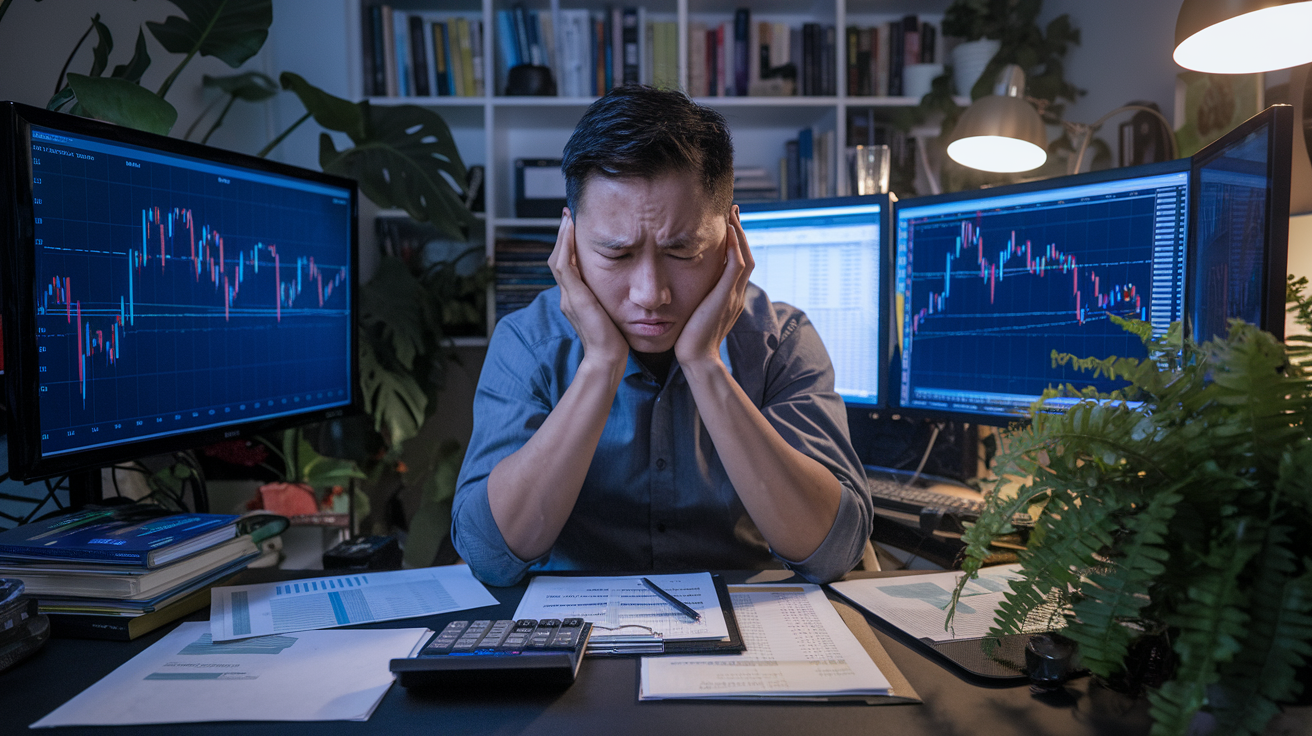
Now that we’ve explored the potential benefits of using leverage in forex trading, it’s crucial to understand that these advantages come with significant risks that every trader must carefully consider.
A. How Losses Are Magnified Equally to Gains
While leverage can amplify profits from minor price fluctuations in currency pairs, it equally increases the risk of significant losses. When you use leverage, any adverse market movement is magnified in the same proportion as potential gains. For example, if you’re using a 100:1 leverage ratio, a 1% move against your position doesn’t just cost you 1% of your investment—it could wipe out your entire margin deposit. This dual-edged nature of leverage means that the same mechanism that can generate substantial profits can also rapidly deplete your trading capital.
B. Margin Calls and Forced Liquidation Explained
When trading on margin, brokers require you to maintain a minimum level of equity in your account. If market movements cause your account equity to fall below this threshold, you’ll receive a margin call requiring you to deposit additional funds. If you can’t meet this call, brokers will initiate forced liquidation of your positions, often at unfavorable prices. This automatic closing of positions is designed to protect both you and the broker from further losses, but it usually occurs at the worst possible time—when markets are moving rapidly against your position.
C. Psychological Pressure of High-Leverage Trading
The psychological impact of high-leverage trading cannot be overstated. Managing large position sizes relative to your actual capital creates immense pressure that can lead to impulsive decision-making. Many traders find that the stress of watching amplified price movements affects their judgment, causing them to abandon their trading strategies, close positions prematurely, or engage in revenge trading to recover losses. These emotional responses often lead to poor trading decisions and further losses.
D. Account Depletion Risks
With high leverage, the risk of complete account depletion becomes very real. Conservative risk management suggests limiting potential losses to no more than 3% of trading capital per trade. For example, with a $10,000 account, even if you’re using high leverage, you should structure your trades so that no single position could lose more than $300. Without such discipline, traders can quickly find themselves facing substantial losses relative to their capital. While forex markets typically have lower volatility than other markets (usually under 1% intraday), the high leverage commonly offered (up to 1:2000 with some brokers) can still lead to rapid account depletion if positions are sized inappropriately.
With these risks in mind, it’s important to also understand the costs associated with leveraged trading, which we’ll explore in the next section. These costs can further impact your overall profitability and must be factored into your trading plan alongside the risks we’ve just discussed.
The Costs Associated with Leveraged Trading

Now that we’ve explored the risks of leveraged trading, it’s important to understand the various costs associated with this type of trading, as these expenses can significantly impact your overall profitability.
A. Spreads and Commissions
When engaging in leveraged forex trading, one of the primary costs you’ll encounter are spreads and commissions. Spreads represent the difference between the bid and ask price of a currency pair. For standard accounts, these spreads can be variable, with major pairs like EUR/USD starting as low as 1.0 pips. Alternatively, RAW spread accounts offer tighter spreads (as low as 0.0 pips) but come with additional commissions.
Commissions for forex trading are typically fixed at around $5 per $100,000 USD traded, though volume discounts may be available for active traders. It’s worth noting that as your leverage increases, so do these transaction costs, since you’re trading larger position sizes. For example, a $500 account might incur fees of just $1 without leverage, but this could jump to $100 when using 1:100 leverage.
B. Overnight Financing and Rollovers
When you hold leveraged positions overnight, you incur rollover or overnight financing charges. These fees represent the interest that brokers pay to financial institutions for the borrowed capital they’re extending to you. Rollover rates are calculated at a specific time (typically 5 PM ET) and are applied to any positions still open at this rollover point.
These overnight fees are essentially interest payments similar to those you’d make on any borrowed funds. The longer you maintain your leveraged position, the more these daily charges accumulate, which can significantly erode your profits over time.
C. Interest Rate Differentials
Interest rate differentials play a crucial role in determining the cost of holding leveraged positions. When trading forex, you’re essentially borrowing one currency to buy another. The difference between the interest rates of these two currencies determines whether you pay or receive interest on your overnight positions.
If you’re holding a currency with a higher interest rate than the one you’ve borrowed, you might actually receive a credit. Conversely, if you’re holding a currency with a lower interest rate, you’ll be charged the difference. These rates are sourced competitively from institutional markets and vary by country.
D. Total Cost Considerations
When evaluating the total cost of leveraged trading, you need to consider all these factors together. Different asset classes carry distinct fee structures – forex typically involves spreads and overnight financing, while cryptocurrency exchanges often impose multiple fees including trading and management fees.
Additionally, potential currency conversion charges may apply when trading in currencies different from your account’s base currency. Standard conversion fees typically run around +/- 0.5% from the market rate, though you can avoid these by trading in your account’s base currency.
Understanding these costs is essential for effective trade planning and broker selection, as fee structures can vary widely across platforms. With these costs in mind, we’ll next explore effective risk management strategies to help you navigate leveraged trading more successfully while minimizing potential losses.
Effective Risk Management Strategies
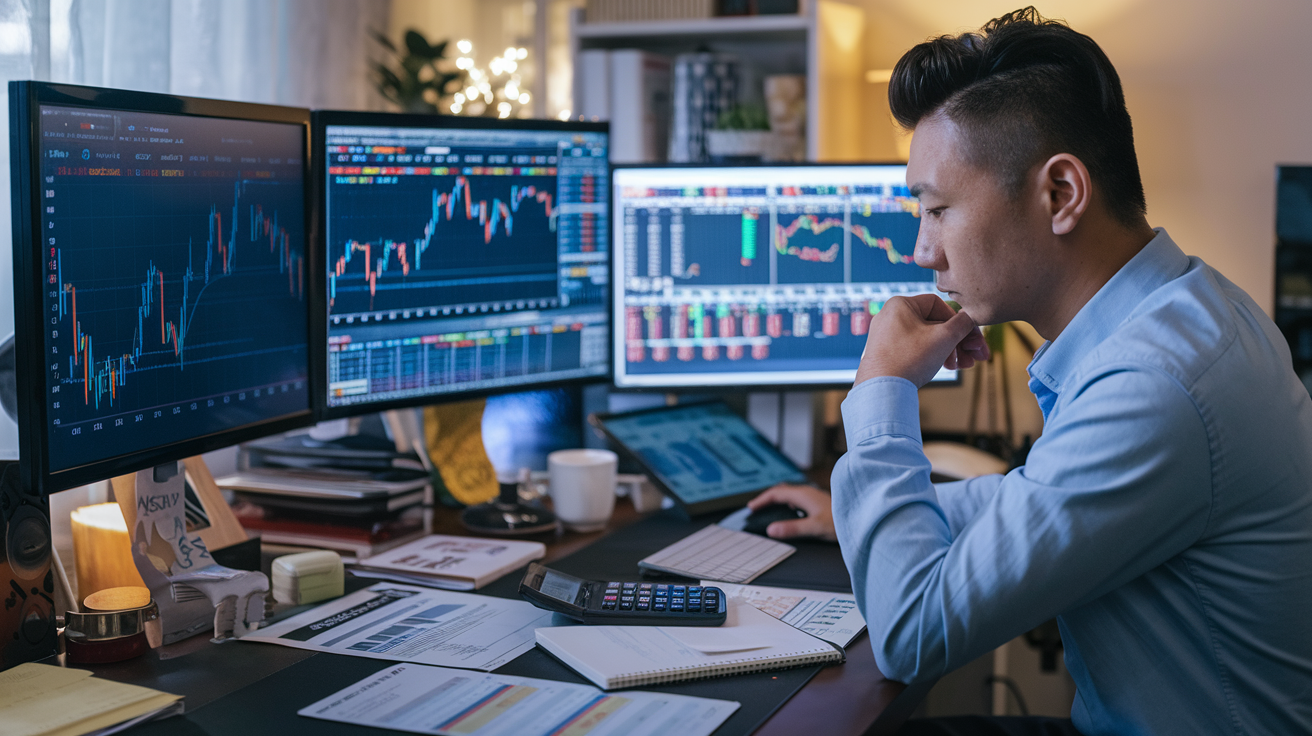
Now that we’ve explored the costs associated with leveraged trading, it’s essential to implement effective risk management strategies to protect your capital and ensure long-term success in forex trading.
Setting Appropriate Stop-Loss Orders
Stop-loss orders are crucial tools that automatically close trades at predefined levels, limiting potential losses. By establishing clear exit points before entering a trade, you protect yourself from significant market movements against your position. These orders act as safety nets, especially important when using leverage where losses can quickly multiply.
Limiting Risk Exposure Per Trade (1-3% Rule)
One fundamental principle of forex risk management is restricting the amount of capital risked on any single trade. The 1-3% rule suggests never risking more than 1-3% of your total trading capital on a single position. This approach ensures that even a series of losing trades won’t significantly deplete your account, allowing you to remain in the market longer.
Selecting the Right Leverage Ratio for Your Experience Level
Your experience should dictate your leverage choices:
- Beginners should start with lower ratios (1:10 or 1:20) to minimize risk while learning
- More experienced traders can gradually increase leverage as their understanding of market dynamics improves
- Always select a leverage ratio that aligns with your risk tolerance and trading strategy
Position Sizing and Diversification Techniques
Proper position sizing involves calculating appropriate trade volumes based on your account size and risk tolerance. Meanwhile, diversification spreads risk across various currency pairs, preventing overexposure to any single market. Together, these techniques create a more balanced portfolio that can withstand volatility in specific currency pairs.
Monitoring Margin Levels
Maintaining sufficient margin is essential to avoid margin calls and forced position closures. Regularly check your available margin and free equity to ensure you have adequate buffer for open positions. Many trading platforms offer margin level alerts that can help you proactively manage your account before reaching critical levels.
By implementing these risk management strategies, you transform leverage from a potentially dangerous tool into a controlled advantage in your forex trading journey.

Forex leverage is a powerful but double-edged sword in the trading world. Throughout this post, we’ve explored how leverage enables traders to control larger positions with limited capital, potentially magnifying profits from small market movements. However, we’ve also highlighted the substantial risks involved, including amplified losses, margin calls, and account liquidation when trades move against you. The costs associated with leveraged trading, such as overnight financing and spreads, further impact your overall profitability.
The most successful forex traders understand that effective risk management is non-negotiable when using leverage. By implementing strategies like setting stop-loss orders, limiting position sizes to 1-2% of your account balance, diversifying across different currency pairs, and consistently monitoring margin levels, you can harness the potential benefits of leverage while protecting your capital. Remember, your choice of leverage ratio should align with your experience level and risk tolerance. With proper education, practice, and disciplined risk management, leverage can be a valuable tool in your forex trading arsenal rather than a pathway to financial disaster.